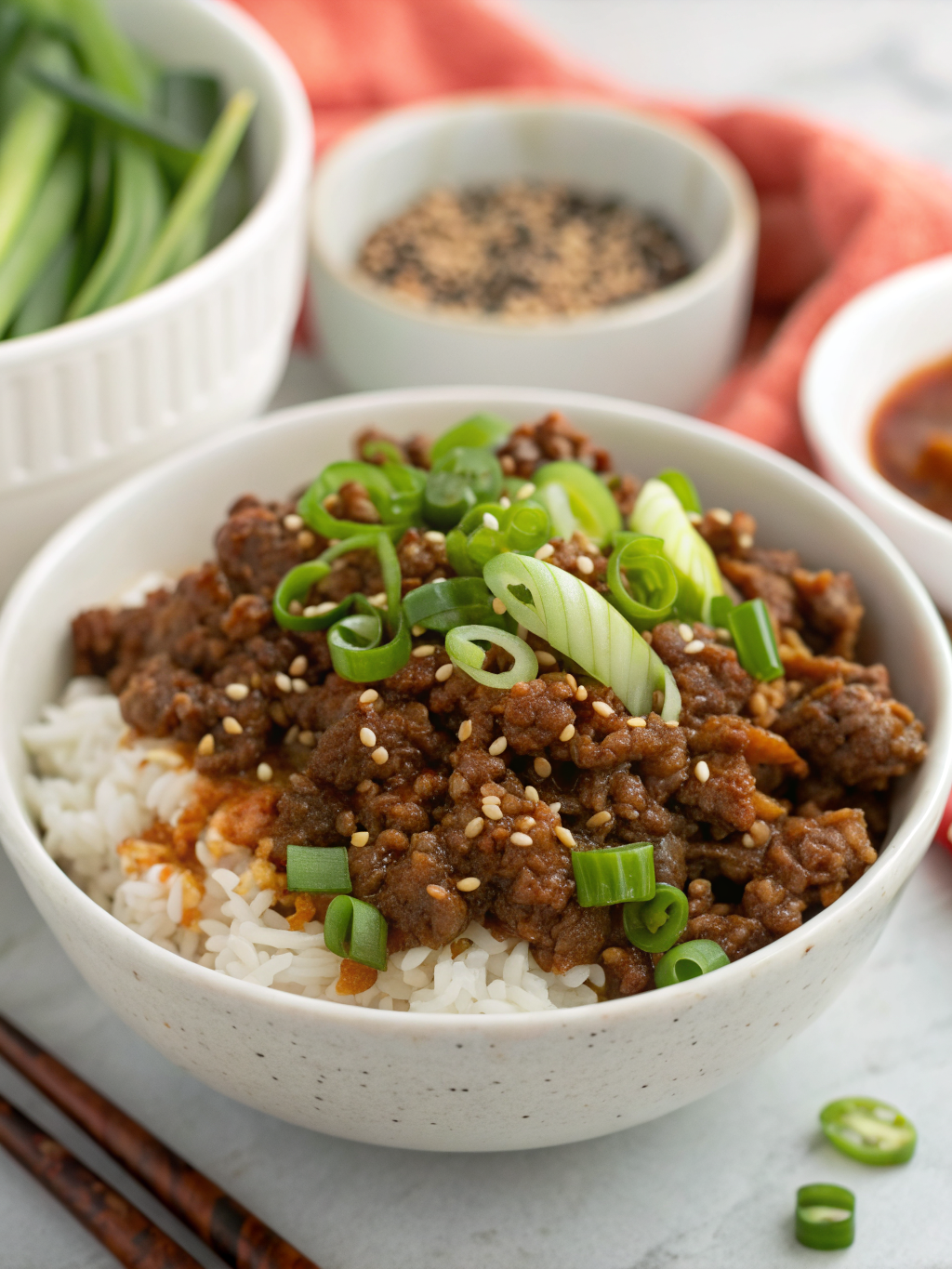
Korean Ground Beef Bowls (20-Minute Meal)

chef nomard
Chef Nomard is the creator and recipe developer at Recipes Idea. He shares easy, flavorful chicken, steak, salmon and beef recipes made for busy home cooks, with clear steps, practical tips and safe cooking temperatures. His goal is simple: turn everyday ingredients into satisfying dinners you can make with confidence.
Korean Ground Beef Bowls (Easy 20-Minute Dinner)
Some evenings, you want a homemade dinner that tastes good without leaving a sink full of dishes. These Korean Ground Beef Bowls are a simple option: savory ground beef cooked with garlic, ginger, soy sauce, a little brown sugar, and Korean chili paste, served over warm rice with fresh vegetables.
The best part is how quickly everything comes together. You don’t need to marinate the beef or prepare a complicated sauce. While the rice cooks, you can brown the meat and mix the sauce in a small bowl.
This is a Korean-inspired take on bulgogi flavors rather than a traditional bulgogi recipe. Ground beef makes it practical for busy weeknights, and you can easily adjust the sweetness and spice to suit your family.
If you enjoy quick beef dinners, keep this recipe handy for nights when you want something more interesting than plain ground beef and rice.
Why You’ll Love These Korean Ground Beef Bowls
Great for leftovers: The beef reheats well and can be used in rice bowls, lettuce wraps, or quick lunch boxes.
Ready in about 20 minutes: Especially convenient when you have cooked rice or quick-cooking rice ready to go.
Simple ingredients: Soy sauce, garlic, ginger, and brown sugar create a flavorful sauce without a long shopping list.
Easy to customize: Add more chili paste for heat or extra vegetables for crunch.
Ingredients List
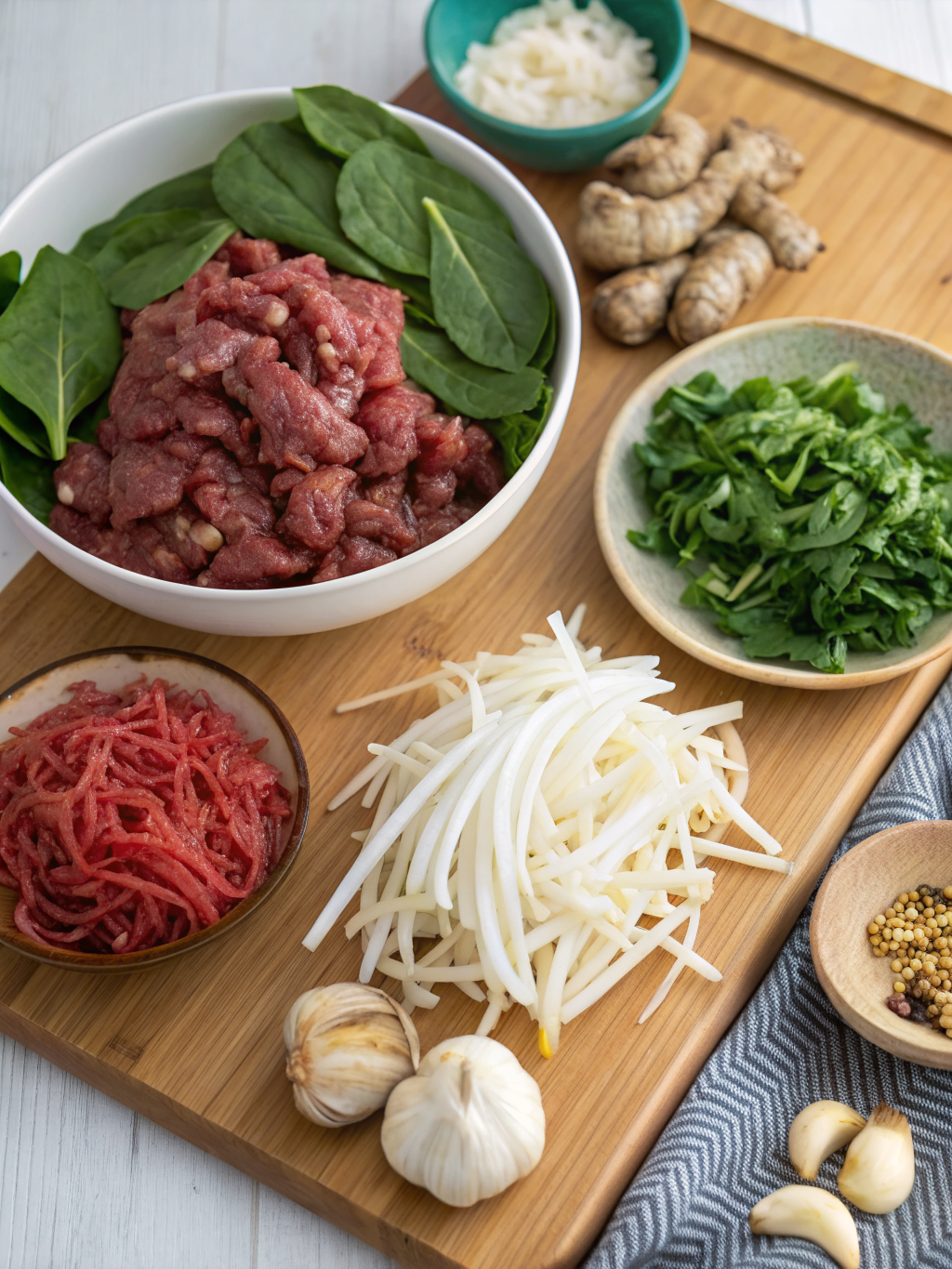
Ingredients You’ll Need
The ingredient list is flexible, so don’t worry if you need to make a few substitutions.
For the Ground Beef
- 1 lb (450 g) ground beef: An 85/15 blend offers a good balance of flavor and moisture. Leaner beef works too.
- 1 tablespoon sesame oil: Toasted sesame oil adds a nutty aroma. You can use a neutral cooking oil for browning and add a little sesame oil for flavor.
- 4 garlic cloves, minced: Fresh garlic gives the beef a stronger, fresher flavor than garlic powder.
- 1 tablespoon freshly grated ginger: Adds warmth and a little freshness. Use 1 teaspoon ground ginger if needed.
For the Sauce
- 1/4 cup low-sodium soy sauce: Regular soy sauce works, but the finished dish may taste saltier.
- 2 tablespoons brown sugar: Start with this amount and add more only if you prefer a sweeter sauce.
- 1 tablespoon gochujang: Korean fermented chili paste adds a savory, slightly sweet heat. Add more to taste.
- 1 tablespoon rice vinegar: Balances the sweetness and richness.
- 1/4 teaspoon red pepper flakes, optional: Use more if you like extra heat.
- 2 tablespoons water: Helps the sauce coat the beef without becoming too concentrated.
For Serving
- 3 cups cooked white rice
- 3–4 green onions, thinly sliced
- 1 tablespoon sesame seeds
- 1 cup shredded carrots or thinly sliced cucumber
- Steamed broccoli, kimchi, or a fried egg, optional
Ingredient note: Gochujang and gochugaru are different ingredients. Gochujang is a thick fermented chili paste, while gochugaru is Korean chili powder. For this recipe, gochujang is the better choice.
Recipe at a Glance
- Prep time: 7 minutes
- Cook time: 13 minutes
- Total time: 20 minutes
- Servings: 4
- Estimated calories: About 450–500 per serving, depending on the beef, rice, and toppings
- Cooking method: Stovetop
How to Make Korean Ground Beef Bowls
Step 1: Prepare the Sauce
In a small bowl, whisk together the soy sauce, brown sugar, gochujang, rice vinegar, red pepper flakes, and water.
Stir until the sugar starts to dissolve and the gochujang is evenly mixed in. Set the sauce aside while you cook the beef.
Doing this first makes the cooking process easier, since the beef can brown without you having to stop and measure ingredients.
Step 2: Brown the Ground Beef
Heat a large skillet over medium-high heat. Add the ground beef and spread it across the pan.
Let it cook undisturbed for about 2 minutes before breaking it into smaller pieces with a wooden spoon or spatula. Continue cooking for another 4–5 minutes, stirring occasionally, until the beef is browned and no longer pink.
If the pan becomes crowded or releases a lot of liquid, allow the liquid to evaporate so the meat can brown properly.
Cook ground beef to an internal temperature of 160°F (71°C). Drain excess fat if necessary, leaving a small amount in the pan for flavor.
Step 3: Add the Garlic and Ginger
Reduce the heat to medium. Add the sesame oil, minced garlic, and grated ginger to the beef.
Stir for about 30 seconds to 1 minute, just until fragrant. Keep the mixture moving so the garlic doesn’t burn.
This step makes a noticeable difference. Garlic and ginger give the beef a fresh aroma that balances the rich, savory sauce.
Step 4: Add the Sauce
Pour the prepared sauce over the beef and stir until the meat is evenly coated.
Let everything simmer gently for 2–3 minutes, stirring occasionally. The sauce should become slightly thicker and cling to the beef without turning dry or sticky.
If the sauce thickens too much, add a tablespoon of water and stir. If it tastes too salty, a little more water and some extra rice can help balance the bowl.
Taste before adding extra soy sauce or chili paste, since both can quickly change the flavor.
Step 5: Assemble the Bowls
Divide the warm rice among four bowls. Spoon the Korean-inspired beef over the rice and add your preferred vegetables.
Finish with sliced green onions and sesame seeds. For a more filling meal, add a fried egg or some steamed broccoli.
I like the idea of keeping the cucumber or carrots separate rather than stirring everything into the hot beef. The fresh vegetables add a cool, crunchy contrast to the warm, savory meat.
Serve immediately while the beef and rice are hot.
Tips for Better Results
Don’t rush the browning. Ground beef develops more flavor when it has enough contact with the hot skillet. Stirring constantly from the beginning can prevent it from browning well.
Keep the heat under control when adding garlic. Garlic can burn quickly, especially in a very hot pan. Lowering the heat before adding it helps preserve its flavor.
Adjust the sweetness gradually. Two tablespoons of brown sugar give the sauce a gentle sweetness. If you prefer a more savory dinner, start with one tablespoon.
Use gochujang carefully. Different brands vary in sweetness, saltiness, and heat. Start with one tablespoon and adjust after tasting.
Prepare the rice first. The beef cooks quickly, so having the rice ready makes it much easier to finish dinner on time. If using leftover rice, reheat it thoroughly.
Easy Variations
Make It Less Spicy
Leave out the red pepper flakes and use a small amount of gochujang, or serve the chili paste separately. This makes it easier for everyone to adjust their own bowl.
Use Ground Turkey or Chicken
Ground turkey and ground chicken both work well. They have a different flavor and may be leaner, so watch the pan closely and avoid overcooking them.
Add More Vegetables
Carrots, bell peppers, broccoli, cabbage, and sliced mushrooms are all good choices. Cook firmer vegetables in the skillet before adding the sauce, or serve steamed vegetables on the side.
Make It Gluten-Free
Use gluten-free tamari instead of regular soy sauce and check that the gochujang and other packaged ingredients are labeled gluten-free. Not every brand is suitable.
Reduce the Sugar
Use one tablespoon of brown sugar instead of two. The sauce will be less sweet, but the garlic, ginger, and gochujang will still provide plenty of flavor.
Serve It Without Rice
For a lower-carbohydrate option, serve the beef over cauliflower rice or in lettuce cups. Keep in mind that the total nutrition will depend on your chosen ingredients and portion sizes.
What to Serve With Korean Ground Beef Bowls
These bowls are filling on their own, but a few simple sides can make the meal more varied.
- Steamed broccoli: A mild vegetable that works well with the savory sauce.
- Cucumber salad: Adds freshness and crunch.
- Kimchi: Provides a tangy, fermented side with a stronger flavor.
- Quick-pickled carrots or radishes: Add brightness and contrast.
- Fried egg: A simple topping that makes the bowl feel more substantial.
You don’t need to prepare all these sides. Rice, beef, and one fresh vegetable are enough for an easy everyday dinner.
Storage and Reheating
Let the cooked beef cool slightly, then refrigerate it in a covered, shallow container within 2 hours of cooking. Store the rice separately when possible, and refrigerate both promptly.
- Refrigerator: Keep leftovers for 3–4 days.
- Freezer: Freeze the cooked beef in an airtight container for about 2–3 months for best quality.
- Reheating: Warm the beef in a skillet over medium-low heat with a small splash of water, stirring until hot throughout. Microwave reheating also works; cover the food and stir halfway through.
For food safety, reheat leftovers to 165°F (74°C). Refrigerate cooked rice promptly as well, and avoid leaving it at room temperature for extended periods.
https://ask.fsis.usda.gov/article/What-is-a-safe-internal-temperature-for-cooking-meat-and-poultry
Frequently Asked Questions
Are Korean Ground Beef Bowls an authentic Korean dish?
This particular recipe is a convenient Korean-inspired meal, not a traditional Korean dish. It borrows familiar flavors such as soy sauce, garlic, sesame, and gochujang and combines them with ground beef and rice for a quick weeknight dinner.
Can I make the beef ahead of time?
Yes. Cook the beef and sauce, refrigerate them promptly, and reheat when needed. For the freshest texture, prepare the vegetables shortly before serving and cook the rice according to safe food-handling guidance.
Can I make this recipe without gochujang?
Yes. You can leave it out for a milder soy-garlic beef bowl. A little chili sauce can provide heat, but the flavor will differ from the original version. If using a substitute, add it gradually and taste the sauce before serving.
Why does my ground beef release so much liquid?
This can happen with higher-fat beef, frozen meat that wasn’t thawed properly, or a crowded pan. Let excess moisture evaporate and allow the meat to brown before adding the sauce.
Can I use leftover rice?
Absolutely. Cold, properly refrigerated rice is convenient for meal preparation. Reheat it thoroughly until steaming hot before serving.
How do I know when the beef is cooked safely?
For ground beef, use a food thermometer and check that it reaches 160°F (71°C). Color alone is not a reliable way to determine whether ground meat is safe to eat.
Nutrition Information
The following values are estimates, not laboratory-tested results. Actual nutrition will vary depending on the fat content of the beef, the amount of sauce used, the rice portion, and any optional toppings.
Estimated per serving, assuming four servings:
- Calories: 450–500
- Protein: 25–30 g
- Total fat: 15–20 g
- Carbohydrates: 45–55 g
- Fiber: 2–4 g
- Sodium: Variable, depending especially on the soy sauce and gochujang
For a more accurate nutrition label, calculate the recipe using the specific brands and quantities you use.
Final Thoughts
Korean Ground Beef Bowls are a practical way to turn a pound of ground beef into a flavorful dinner without spending the evening in the kitchen. The sauce is easy to adjust, the ingredients are flexible, and the leftovers make a convenient lunch the next day.
Start with the basic recipe, add the vegetables you already have, and adjust the sweetness and heat to your taste. Once you’ve made it, you’ll have an easy formula to return to whenever rice and ground beef are on the menu.
If you make these bowls, try serving them with cucumber, green onions, and sesame seeds for a fresh finish.