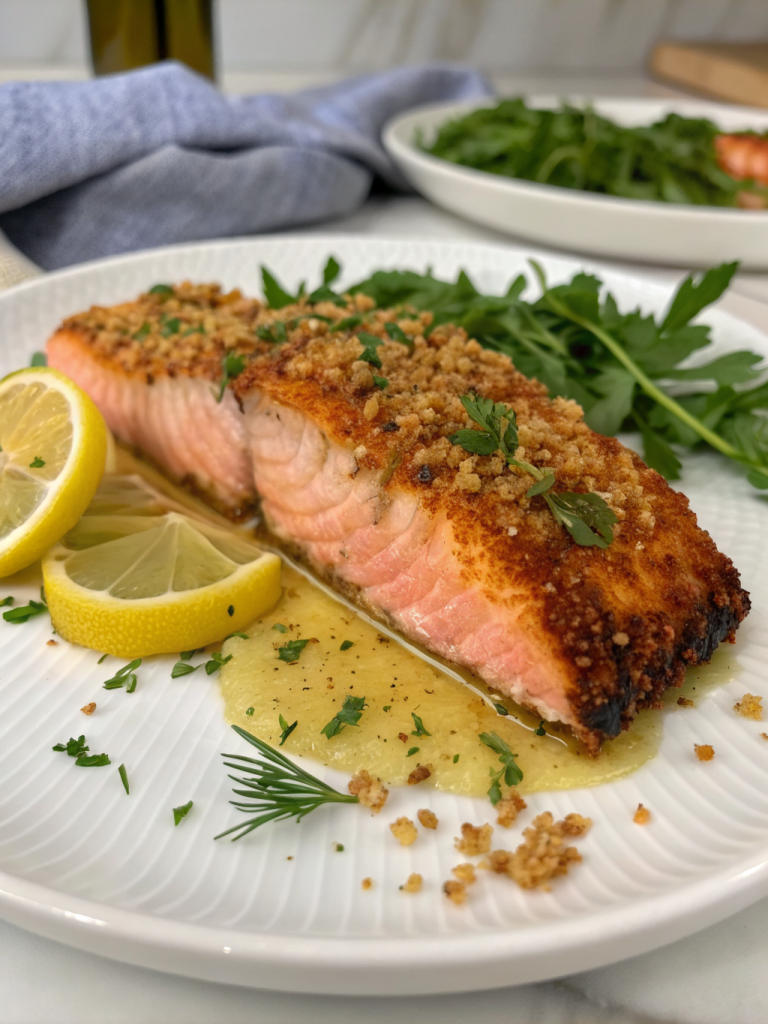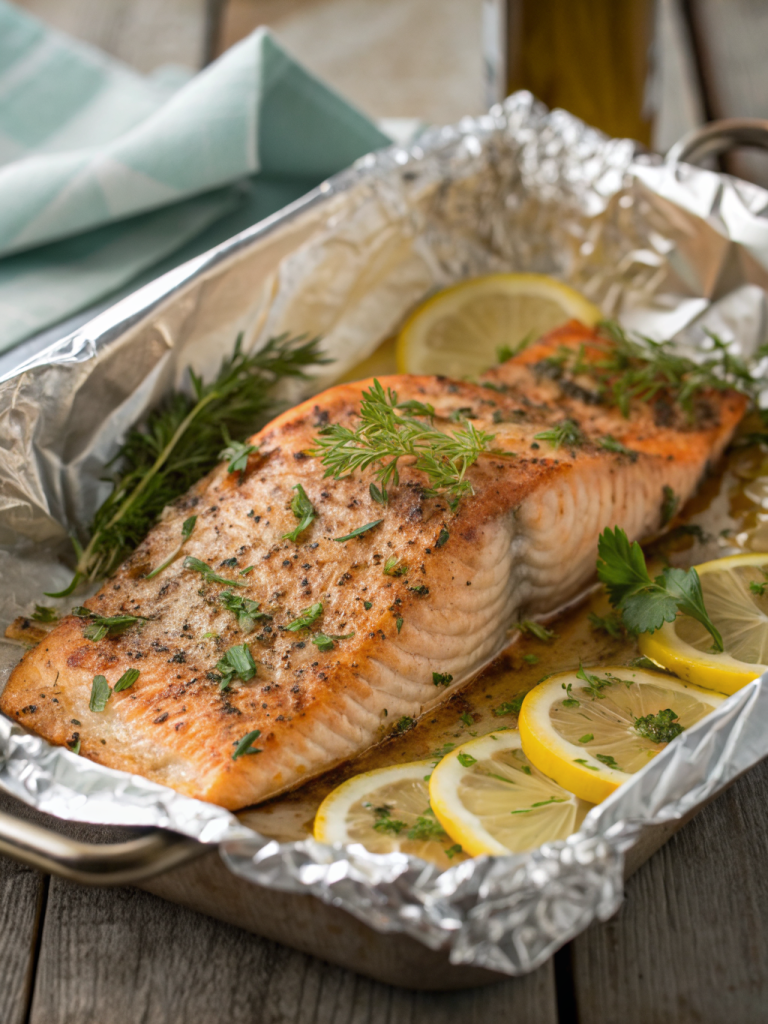
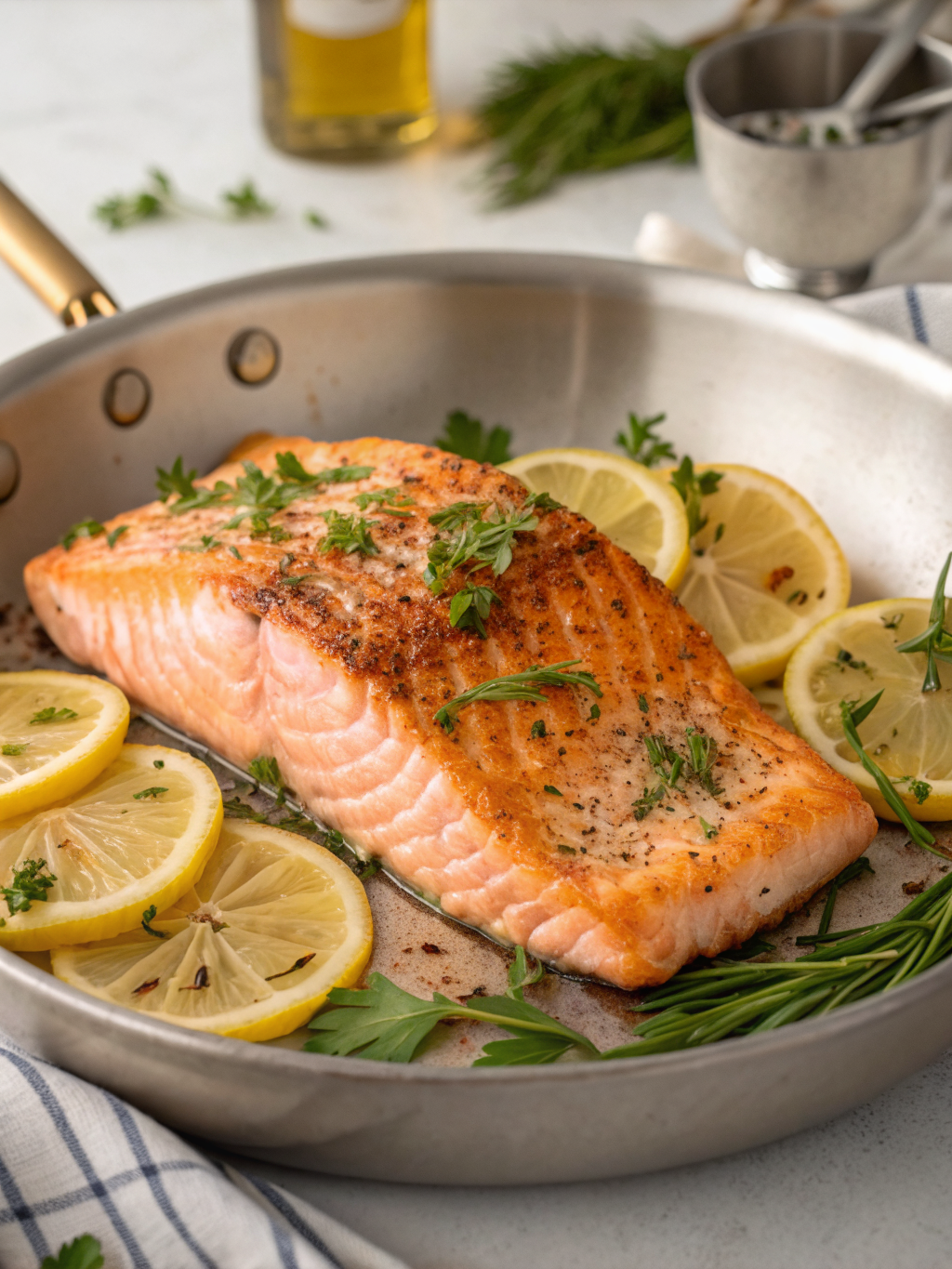
Pan-Seared Salmon with Crispy Skin

chef nomard
Chef Nomard is the creator and recipe developer at Recipes Idea. He shares easy, flavorful chicken, steak, salmon and beef recipes made for busy home cooks, with clear steps, practical tips and safe cooking temperatures. His goal is simple: turn everyday ingredients into satisfying dinners you can make with confidence.
Pan-Seared Salmon with Crispy Skin
What if the single thing standing between you and restaurant-quality salmon isn’t a fancy pan, an expensive fillet, or a secret marinade — but the four minutes you refuse to stop touching it? Most home cooks flip their fish too early, too often, and then blame the skillet. Perfect pan-seared salmon is a technique, not a talent, and it takes under 15 minutes from fridge to fork.
This guide breaks down exactly how heat, moisture, and timing work together to create shatteringly crispy skin salmon with a buttery, blush-pink center. No sous-vide, no deep fryer, no guesswork — just one hot skillet and a few non-negotiable rules.
Ingredients List
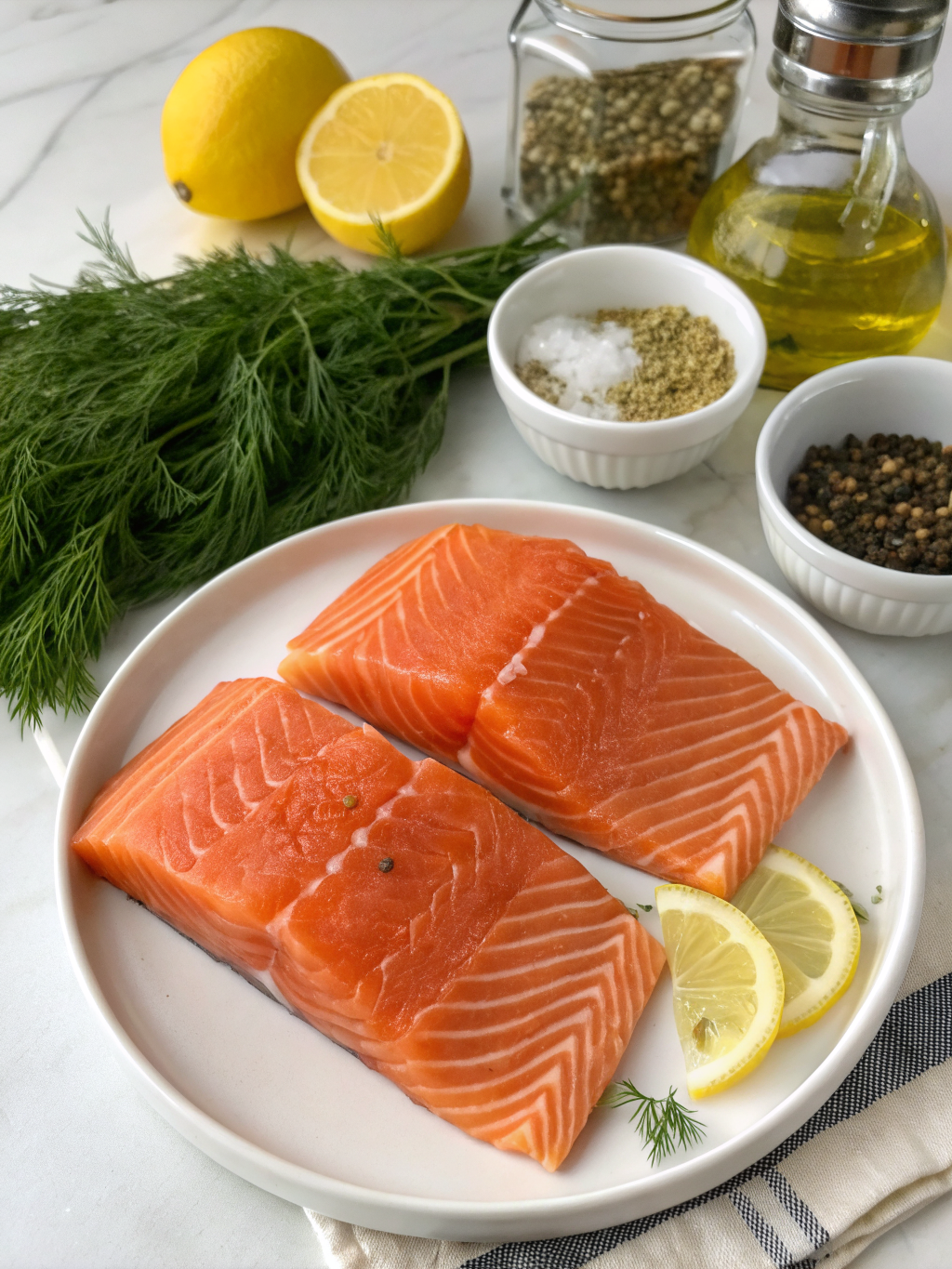
Simplicity is the point here. Great salmon needs almost nothing, so every ingredient has to earn its place in the pan.
- 4 skin-on salmon fillets (6 oz / 170 g each, about 1-inch thick) — center-cut fillets cook evenly; thin tail pieces overcook fast. Substitution: Arctic char, steelhead trout, or sea bass work beautifully.
- 1½ tsp kosher salt — coarse flakes draw moisture from the skin, which is the real crisping secret. Substitution: ¾ tsp fine sea salt.
- ½ tsp freshly cracked black pepper — add after searing to avoid scorching.
- 1½ tbsp high-smoke-point oil (avocado, grapeseed, or refined olive oil) — it shimmers at 400°F+ without burning. Avoid: extra-virgin olive oil or butter alone.
- 2 tbsp unsalted butter — added at the end for nutty richness and glossy basting.
- 3 garlic cloves, lightly smashed — perfumes the butter in seconds. Substitution: 2 shallot halves.
- 3 sprigs fresh thyme or dill — herbaceous steam that clings to the flesh. Substitution: rosemary (use sparingly) or ½ tsp dried thyme.
- 1 lemon — half for juice, half cut into wedges for serving.
- Flaky finishing salt — the crunchy exclamation point.
Buying tip: look for fillets with firm, springy flesh and skin that’s silver and intact. Torn skin tears further in the pan and leaks moisture, which sabotages crisping.
Timing
- Preparation time: 10 minutes (including 5 minutes of counter-top tempering)
- Cooking time: 8–10 minutes
- Total time: 20 minutes
For context, the average baked salmon recipe clocks in at 30–35 minutes with preheating. At 20 minutes total, this stovetop salmon method is roughly 40% faster — and because the fish never sits in dry oven air, testers consistently rate pan-seared fillets as noticeably juicier.
Active hands-on time is only about 7 minutes, making this one of the highest-return weeknight proteins you can cook. Rest time after cooking: 2–3 minutes.
Step-by-Step Instructions
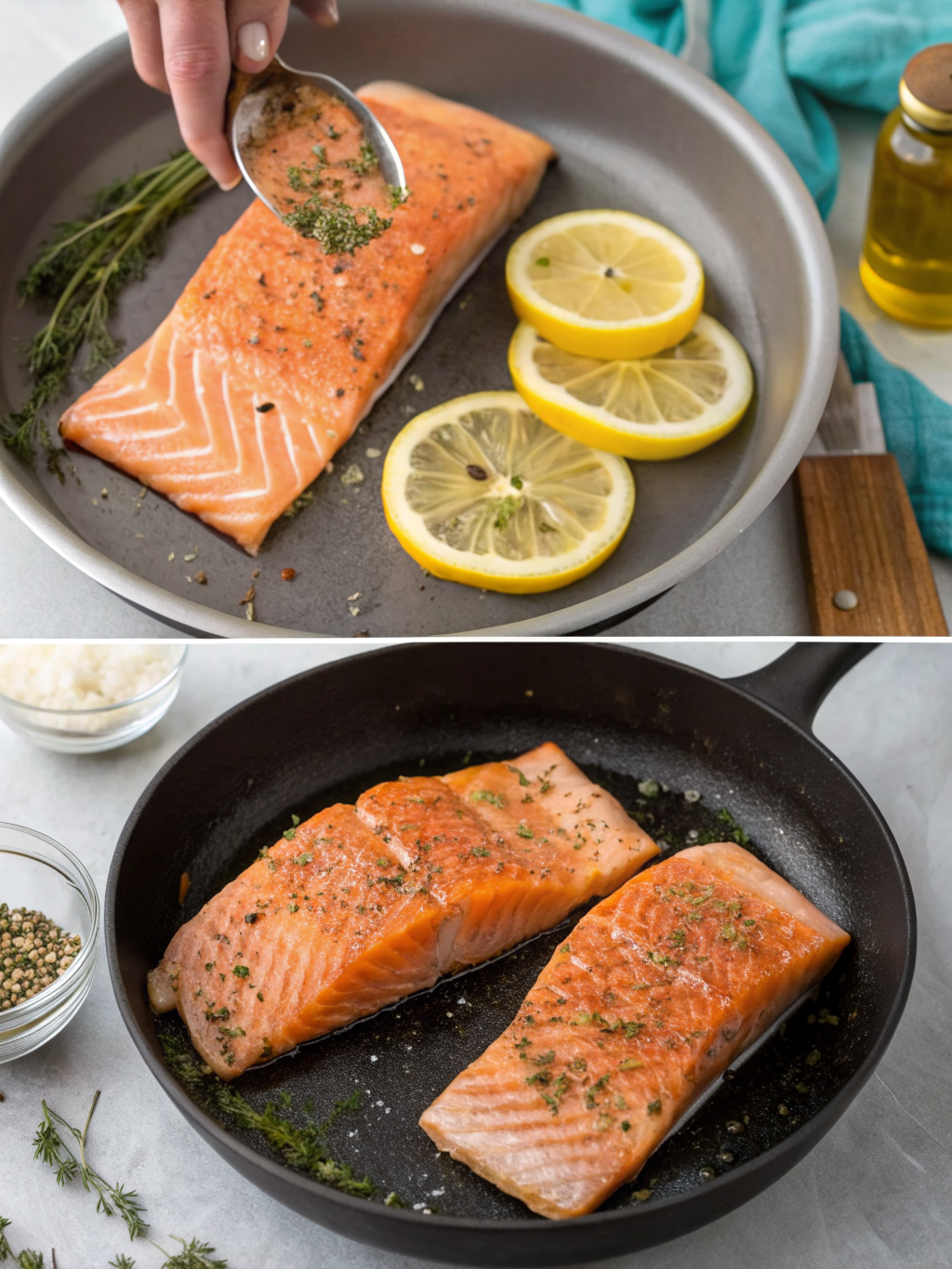
How to Cook Salmon With Crispy Skin
Step 1: Pat the Salmon Dry
Use paper towels to dry the salmon fillets thoroughly, especially the skin. Removing excess moisture helps the skin brown more evenly in the pan.
If you have extra time, place the fillets uncovered on a rack in the refrigerator for 30–60 minutes to help dry the surface. This step is optional, but it can improve the texture of the skin.
Step 2: Season Just Before Cooking
Season the salmon with salt and black pepper shortly before it goes into the pan. If you dried the fish in the refrigerator, remember that the surface may already be slightly dry, so you won’t need to leave it out for long.
There’s no need to bring raw fish fully to room temperature. Preparing the pan and ingredients while the salmon stays refrigerated is a practical approach.
Step 3: Heat the Pan
Place a stainless-steel or cast-iron skillet over medium to medium-high heat. Add a thin layer of a suitable cooking oil and let it heat until it shimmers without smoking.
A nonstick skillet can also work well. Use moderate heat and follow the manufacturer’s instructions for your pan.
Step 4: Place the Salmon Skin-Side Down
Carefully lay the fillets in the pan, skin-side down, lowering them away from you to help reduce splattering.
You should hear a gentle sizzle. If the pan seems too cool, allow it to heat a little longer before adding the fish next time. Avoid moving the fillets immediately after placing them in the pan.
Step 5: Let the Skin Become Golden
Press the fillets gently with a fish spatula for about 10–15 seconds if the skin curls. Then allow the salmon to cook undisturbed for approximately 4–6 minutes, depending on thickness.
As the fish cooks, the flesh will gradually become opaque from the bottom upward. The skin should look golden and release more easily from the pan when it is ready to turn.
If the skin sticks firmly, give it a little more time rather than forcing it loose.
Step 6: Flip and Add Butter
Turn the fillets carefully and cook the flesh side for another 1–3 minutes, depending on thickness.
For extra flavor, add a small knob of butter, a lightly crushed garlic clove, and fresh thyme or parsley. Tilt the pan carefully and spoon the melted butter over the salmon for about 30–60 seconds, taking care not to burn the garlic.
Finish with a squeeze of fresh lemon juice.
Step 7: Check That the Salmon Is Cooked
For food safety, the USDA recommends cooking fish to an internal temperature of 145°F (63°C), measured at the thickest part with a food thermometer.
Remove the salmon from the heat once it reaches the recommended temperature. Let it rest briefly before serving, keeping the skin facing upward so it stays crisp.
Nutritional Information
The following values are estimates for one 6-ounce salmon fillet prepared with a modest amount of oil and butter. Actual nutrition will vary with the fish, portion size, and amount of fat used.
- Calories: Approximately 350–450
- Protein: Approximately 34–40 g
- Total fat: Approximately 20–30 g
- Carbohydrates: Approximately 0–2 g before side dishes
- Sodium: Varies with the amount of salt added
- Omega-3 fatty acids: Amounts vary by salmon species and whether the fish is wild or farmed.
Salmon provides protein and omega-3 fatty acids, including EPA and DHA. For reliable information on recommended fish intake and its nutritional benefits, consult the American Heart Association’s fish and omega-3 guidance.
Easy Ways to Adjust the Recipe
- Use less butter: Reduce the butter or replace it with a little olive oil and finish with lemon juice.
- Make it dairy-free: Skip the butter and use olive oil instead.
- Reduce sodium: Season lightly and add lemon zest, black pepper, or fresh herbs for extra flavor.
- Choose your preferred salmon: Wild and farmed salmon can both work well. Cooking time depends more on the thickness of the fillet than on the label.
- Keep it low-carb: Serve with sautéed spinach, asparagus, or roasted cauliflower.
What to Serve With Crispy Skin Salmon
A few simple sides can turn this salmon into a complete dinner without adding much preparation time.
- Lemon garlic asparagus: A fresh vegetable side that cooks quickly.
- Mashed potatoes: A comforting option that pairs well with the buttery pan sauce.
- Sautéed spinach: An easy choice when you want a lighter plate.
- Rice and steamed vegetables: A practical combination for an everyday family meal.
- Cucumber and citrus salad: Adds freshness and contrast to the rich salmon.
When plating, place the salmon skin-side up and spoon any lemon butter around the fillet rather than directly over the crispy skin. This helps preserve its texture until serving.